Kenwood TH-D75

The Current Kenwood Flagship
The TH-D72 (2010) and the TH-D74 (2016) were abruptly discontinued in December 2020 when a fire at the AKM semiconductor plant cut off the converter chips they relied on, leaving Kenwood with no dual-band handheld until the TH-D75 shipped in January 2025.
What’s New Since the D74
If you know the D74, the D75 will feel a lot the same: tri-band transmit on 2m, 1.25m, and 70cm, and Kenwood’s industry leading APRS support. It still has D-STAR, and the same wideband all-mode receiver that pulls in everything from HF SSB up through the airband. What changed is the connectivity and the digital feature set:
- USB-C, finally. The D74’s micro-USB (data only) gives way to a USB-C port that both charges the radio and acts as a PC interface - and it can do both at once.
- Two D-STAR streams at once. The D75 can receive two D-STAR signals simultaneously and monitor digital modes on both the A and B bands, where the D74 was limited to one.
- D-STAR without a hotspot. A new DV Gateway mode lets the radio reach D-STAR reflectors over the internet through a phone, tablet, or PC (via USB or Bluetooth), and Reflector Terminal mode makes connecting to rooms straightforward. No separate RF hotspot required.
- Standalone APRS digipeater. The D75 has an APRS digipeater.
- Longer memory names. Memory channels carry 16-character alphanumeric names shown alongside the channel number, double the D74’s 8.
- Much better voice guidance and a Bluetooth headset PTT, plus a refreshed, more ergonomic body.
The TH-D75 does not have full-duplex cross-band operation. The D74 dropped it in 2016 and the D75 still leaves it out, so satellite operators who want to hear their own downlink while transmitting continue to love the TH-D72.
Must Have Accessories
As I mentioned in my initial review, the TH-D75 does not support Bluetooth Low Energy, which became available in Bluetooth version 4.0. From a practical perspective, that means you can’t make a bluetooth connection with an iOS device. So no bluetooth TNC from the TH-D75 to aprs.fi on your iphone. Georges, WH6AZ created the B.B. Link Adapter to solve this problem. It’s a small hardware bluetooth bridge device which speaks Bluetooth 3.0 for the kenwood, and Bluetooth Low Energy for your iPhone. Georges no longer produces and sells the adapter, but the hardware design and software that powers it are open source, so you can buy the parts and make one if you need it.
With everything turned on (GPS, APRS or TNC) the TH-D75 burns through the battery faster than we would all like. You’ll want another battery for any mission which requires extended operation. You could buy another Kenwood batttery or a third party equivilent. Or you can get the BP-K75L from W0AEZ Radio Gear. It has almost triple the capacity of the stock battery, has user replaceable cells, and it’s own USB-C port for charging. It is not compatible with the Kenwood desk cradle (KSC-25LS). Makes the radio chunky, but it will run all day long.
Specifications
Market
| Released | January 2025 |
| Discontinued | No |
| Similar To | None |
| Specs checked | June 2, 2006 |
Circuitry
| Design | Dual band, dual receive |
| RX circuit | Triple superheterodyne |
| Operation | |
Full duplex Cross band repeater | |
Receiver
| RX frequencies | 0.1-76 MHz, 78-108 MHz, 108-524 MHz |
| Also receives | |
Airband Broadcast FM NOAA NOAA alert | |
Transmitter
| Bands | 6m2m1.25m70cmGMRSMURS |
| TX power settings | H=5W, M=2W, L=0.5W, EL=0.05W |
| Extras | |
Roger beep Unlockable | |
Memories
| Memories | 1000 |
| Memory groups | 30 |
| Length of memory name | 16 |
| Memory details | 30 nameable memory groups; 1 NOAA weather memory group; 16 character alphanumeric memory names |
Digital
| Voice | |
D-STAR DMR System Fusion NXDN | |
| Data | |
APRS DPRS KISS TNC GNSS | |
| Bluetooth | 3.0, doesn't support Bluetooth Low Energy (BLE) and therefore won't connect with iOS devices. Works with many Bluetooth headsets and speaker mics. |
| USB | Charging, KISS TNC, programming |
| Programming | |
CHIRP | |
Battery
| Battery capacity | 1820mAh |
| Battery voltage | 7.4V |
| Charges from | |
Cradle Radio USB | |
| Cradle USB connector | None |
| Cradle DC input connector | None |
| Cradle DC input voltage | 12V |
Physical
| Measured | |||
|---|---|---|---|
| Width | 60mm | 2.36in | |
| Height | 136mm | 5.35in | |
| Depth | 34mm | 1.34in | |
| Weight | 204g | 7.20oz | |
| Carry weight | 346g | 12.20oz | |
| IP rating | IP54 | ||
| MIL-STD-810 | None | ||
| Display | 1.74" TFT transflective color LCD | ||
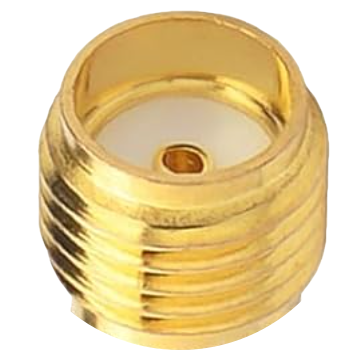
| Antenna connector | SMA female | ||
| USB connector | USB-C | ||
| DC input connector | 3.5mm x 1.35mm | ||
| DC input voltage | 13.8V | ||
| Audio connector | K1 (Kenwood) | ||
| PTT | Single side button | ||
| Buttons | Monitor/squelch, power | ||
| Knobs | Encoder knob with volume ring | ||
| MicroSD | Firmware updates, recording, disk mode | ||
| Built in | |||
Flashlight | |||