Salty Lizard 2026 Event Report
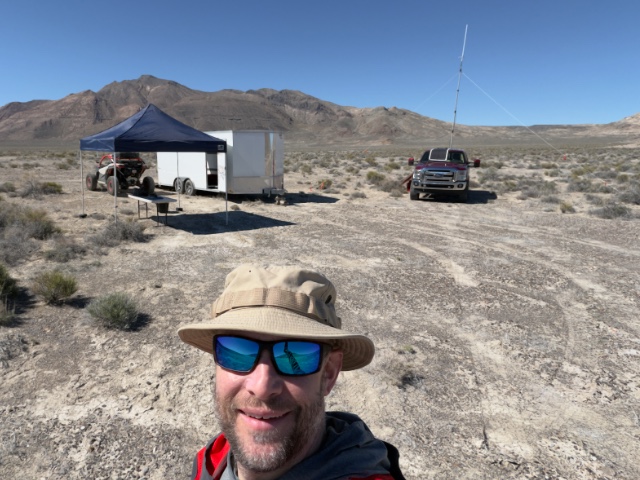
Each spring, the Salty Lizard gravel bike race brings hundreds of cyclists to Utah’s west desert. Most of the course has no cell service, so amateur radio operators provide communication support for the 3 aid stations and drive the SAG vehicles which roam the course. I volunteered to help out at this years event, which was held on April 4, 2026.
The race course goes around and through the Silver Island Range, a small outcrop of rock in the middle of one of least hospitable places on earth. There are few plants, and fewer animals. The range lies within a 90 mile stretch between fresh water sources. If you don’t bring it, you don’t have it. The difference between the mountains and the surrounding salt flats is there’s more rock on the mountains, and less salt. For a ham radio operator, this unforgiving environment makes a great place to pressure test your skills and equipment.
Using the Incident Command System
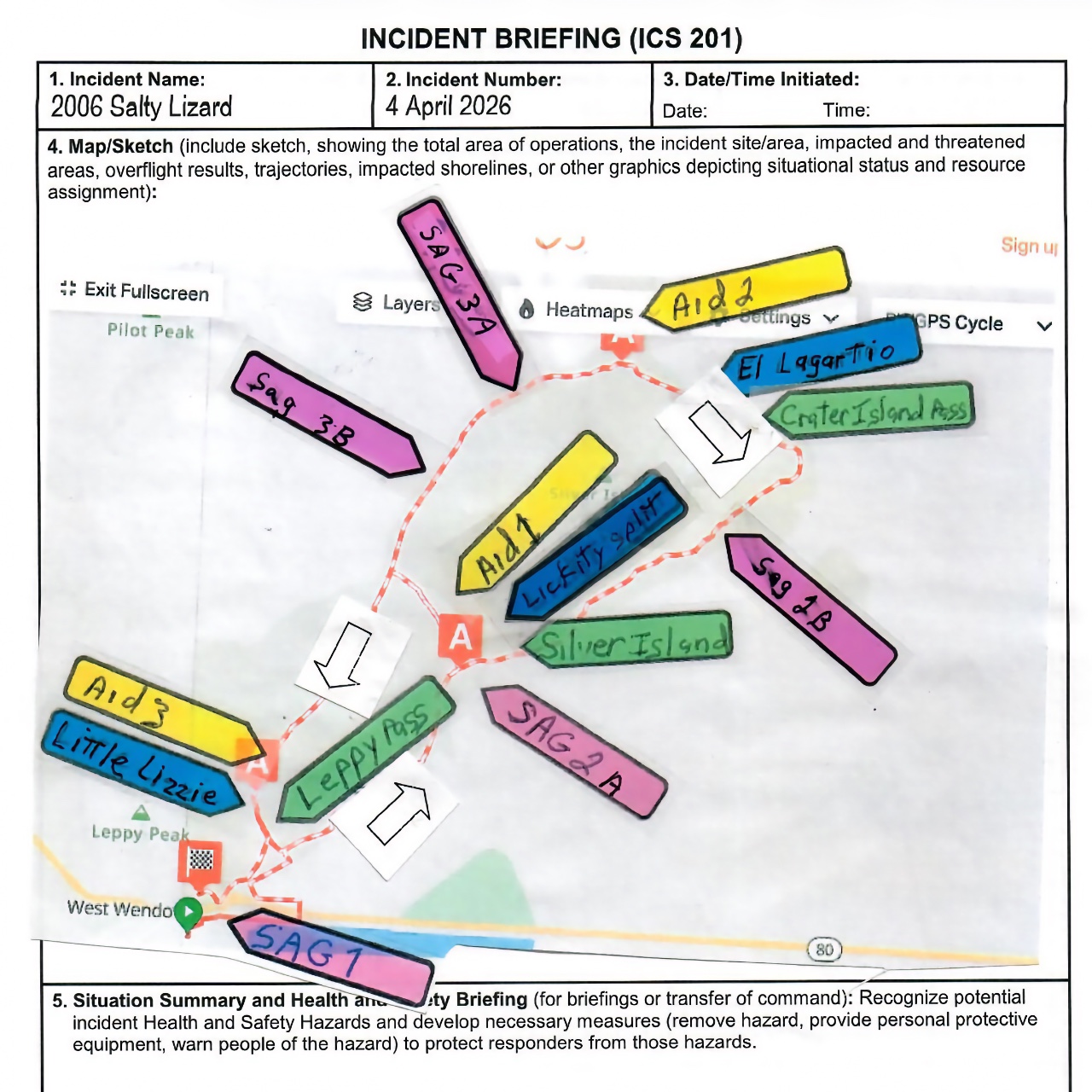
Rex KC7SHL from the West Desert Amateur Radio Club organized the ham radio support for the event. He used a few of the forms from the Incident Command System (ICS) which is part of National Incident Management System (NIMS) from the United States Department of Homeland Security. We sometimes think of ICS as only being useful for managing large multi-agency disaster responses. But ICS was designed to be easily adapted to any size event, whether emergency or planned.
It was easy adapt the ICS for this bike race. In advance of the event, Rex sent out several iterations of the ICS 201 Incident Briefing form, which contained all the evolving details of the event. This form had an overview map, the GPS locations of the various aid stations, and the three routes different groups of riders would be following. He included the ICS 204 form so everyone was clear on what our assignments were. He also sent the ICS 205 with the radio frequencies we would use as part of the event. A few pages of filled out forms, easy to follow and understand, clearly communicated all the information we needed.
I logged the key activities at my station using ICS form 214, starting when I checked in with Rex at the start/finish line the night before the event started. I logged when I arrived at my aid station, when I had my radio station set up and operational. Early the next morning before the first group of riders started, I logged when I established contact with Net Control. By the time the event was over, my activity log fit neatly on a single page.
Loadout
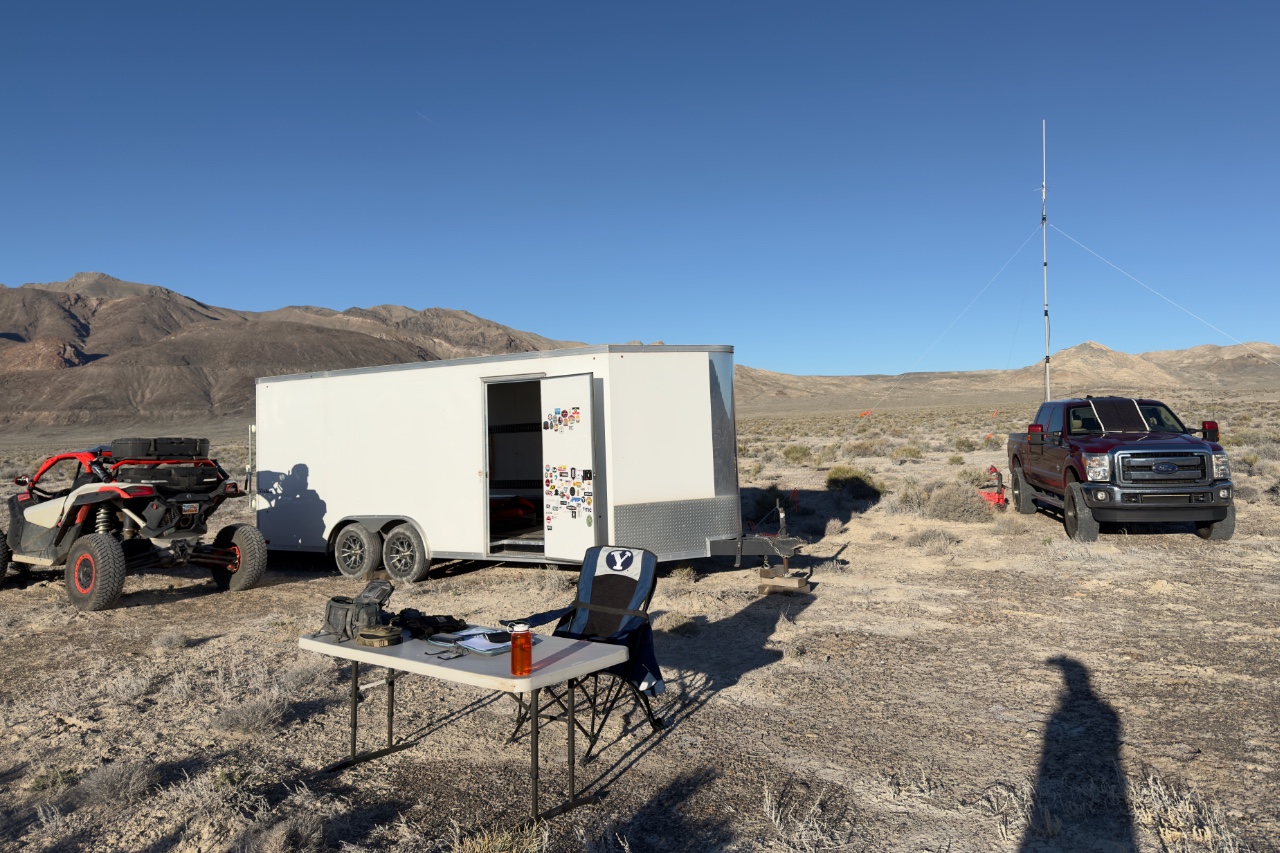
Here’s the key equipment I used during the event. Don’t look at this list and think that if you don’t have all this you can’t do an event. There are many events that require nothing more than a 5W handheld and an extra battery. Because of the location, terrain, and length of the event, I needed to bring quite a bit of stuff to operate my station.
- Kenwood TM-V71 50W mobile radio
- 25ft Max-Gain Systems push-up fiberglass mast
- Diamond X50 antenna
- LMR400 feed line
- 40 Amp Hour LiFePO4 battery
- 42W Powerfilm rollable solar panel
- MPPT solar charge controller
- Baofeng UV5R Mini
- Wouxun KG-UV9PX
I also brought along the following backup gear:
- Yaesu FTM500DR 50W mobile radio (it’s mounted in my truck but can easily be removed and pressed into service elsewhere)
- Honda EU1000i generator
- Diamond X300 antenna
- Extra feed lines
- Kenwood TH-D75
Lessons Learned
I had a few specific things I wanted to test on this event.
First, I wanted to run the Kenwood as a cross-band repeater, with one side of the radio connected to the repeater used for the event, and the other side on a simplex frequency. This setup allowed me to use a handheld during the race, which otherwise would not be possible because a handheld can not reach the repeater we used. This setup worked great, and I did all my comms using through the cross-band repeater using a handheld.
Second, running the Kenwood as a cross-band repeater materially increases the transmit duty cycle, because every signal received is also transmitted. I wanted to find out if my solar panel could keep up with the increased current load. In ideal solar conditions, not too hot, and full direct sun, my solar panel put as much power back into the battery as the radio drew out.
Tips and Tricks
If you decide to do an event, here’s some tips and tricks I’ve learned that might be helpful.
-
Be self-sufficient. Bring everything you’ll need during the event, including water, food, shade, and a chair.
-
Make a checklist of everything you need for an event. If it’s your first event consider a dry-run at a local park. Use your checklist to pack up everything you need for the event. Drive to the park, and set up your station and get on the air. You’ll quickly learn whether your equipment all works like you expected, and what you forgot to put on your checklist.
-
Two is one and one is none. Have a backup for everything. One of the ham radio operators at this event couldn’t get his station working because he had a short in his feedline, and he didn’t have a second cable. My backup antenna saved me on this trip. I planned to use a Diamond X300, but when I went to attach it to the mast I found that one of the screws was missing. Had I not brought along a second antenna, I would have been out of commission.
-
Bring ping or orange flagging tape to attach to the guy lines on your mast. You don’t want anyone tripping or running into them during the event.
-
Shade is great for humans, and essential for equipment. I brought a small tarp to create shade for the battery and the Kenwood radio. If they sat in direct sun all day I’m sure they would have overheated.
-
Get an inexpensive zipper binder to use for your log book. Hole punch all your materials for the event, including blank pages for your activity and communications log. This will keep the papers from blowing away in the breeze during the event.
-
This event was long, I was on station from 6:45a to 2:35p. I went through several handheld batteries. If you are using a handheld in long events like this one, it’s a good idea to have a main power source (large battery, solar panels, generator) that you can recharge your handheld batteries from.